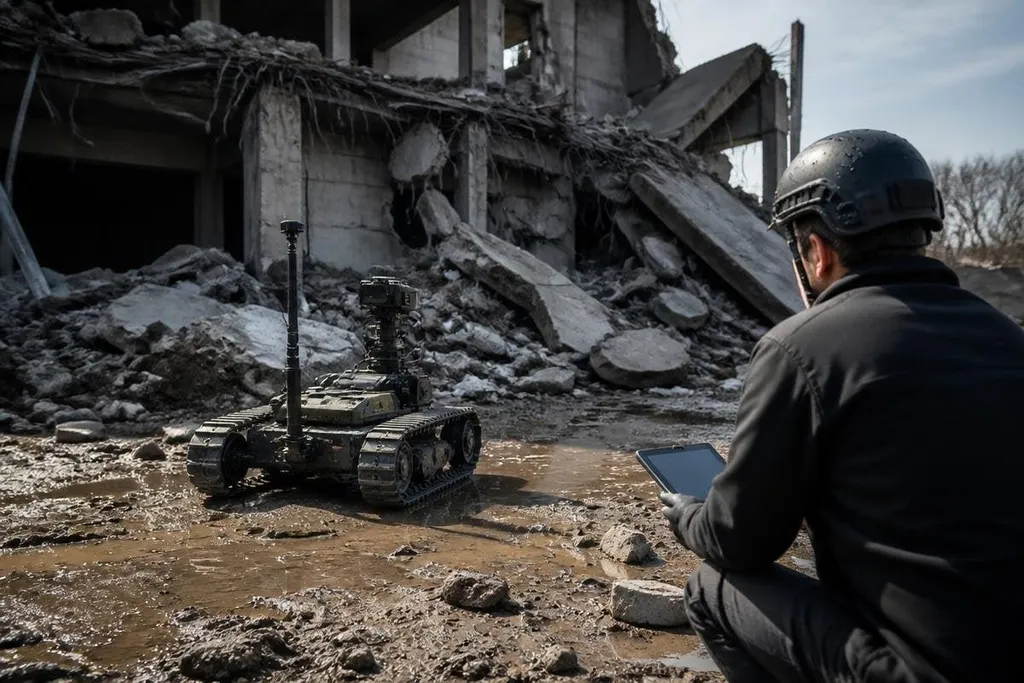
A rescue robot may need to move through smoke, rubble, floodwater, or a damaged building while a person watches from a safe place. Its value comes from useful work under those conditions, not from a smooth video filmed in a clear room.
- Find people: thermal cameras and microphones can help locate someone who cannot be seen.
- Reach unsafe places: tracked drives, sealed electronics, and a robotic arm support work near debris and water.
- Keep the operator informed: video, sensor data, and a stable radio link let a remote crew choose the next move.
The robot needs more than a camera
A camera shows a scene, but rescue work often hides the person who needs help. Smoke can block visible light, while rubble can leave only a small gap for sound or heat to pass through.
A useful platform may combine a thermal camera with LiDAR, which measures distance using laser pulses. An inertial measurement unit, or IMU, records motion and tilt.
Together, these sensors help the operator judge whether a route is open, steep, or unsafe for the robot.
That information must arrive in a form a tired operator can read quickly. A clear map, a front camera view, and a warning when the robot starts to tip matter more than a screen packed with raw sensor feeds.
Movement decides where it can work
Wheels suit flat floors. Rescue sites rarely offer them. A tracked drive can cross loose material and climb over small obstacles, while articulated legs may place each foot with more control on broken ground.
Each design gives something up. Tracks can be heavy and hard to turn in a narrow space. Legs need more control and can lose balance. A rescue team needs to know the limit before sending the robot through a doorway or across a damaged stairwell.
The body also needs protection. Water, dust, heat, and falling material can stop a robot before its arm does any useful work. An IP rating describes protection from dust and water, but it does not tell you how the full system behaves after a hard impact or long exposure.
The operator remains part of the system
Autonomy can help with small actions such as holding a heading, keeping a steady arm position, or stopping when a motor detects a blocked joint. The operator still needs control when the route changes or a person appears in the robot's path.
That makes the control link a safety part, not an accessory. If video freezes, the robot should stop or hold its position. If the link drops, the team needs a known recovery step instead of a machine that keeps moving without guidance.
A rescue-robot buyer needs reports that name the machine, test site, date, and recovery step. Rescue robotics reporting from Robot24.com can help you check those details before training starts. The next question is whether operators can read the controls and act when the search changes.
Training matters too. A firefighter or search specialist may understand the site better than a robotics engineer, but they still need to learn the controls. The interface should show drive direction, tilt, battery state, link quality, and arm position without forcing the operator to interpret technical data during a search.
The hard part is helping without causing harm
A robot that reaches a trapped person can still make the scene worse. Its tracks may shift loose debris, its arm may pull against a weak structure, or its lights and motors may hide a faint sound.
The machine needs force limits, a physical stop, and a way to retreat. It also needs a clear record of what it sensed and when it moved, so the team can review the search after the site is safe.
I'd choose a slower robot with predictable controls over a faster one that gives the operator poor feedback. In rescue work, a missed signal or sudden movement can cost more than a few minutes.
A field-use checklist
Before a rescue team buys or tests a platform, check these points:
- Sensor view: Can it show heat, distance, tilt, and sound in the same operation?
- Surface limits: Test loose rubble, wet floors, slopes, and narrow entries that match the planned site.
- Link failure: Confirm what the robot does when video or control data stops.
- Physical recovery: Check whether two people can lift, pull, or power down the robot safely.
- Arm control: Set force limits before the gripper touches a door, cable, or person.
- Operator training: Measure how long a new team member needs to complete a basic search.
The next step for rescue robotics is a field trial with emergency crews, poor visibility, damaged routes, and failed links built into the test. Until a machine can show its limits under those conditions, its rescue role remains a plan rather than a proven tool.